
My brows turned blue or red — how do I fix them?
A colour-shifted brow is not the end of the road, but it is never fixed by putting new colour on top. When a correction is enough, and when removal has to come first — in the right order.
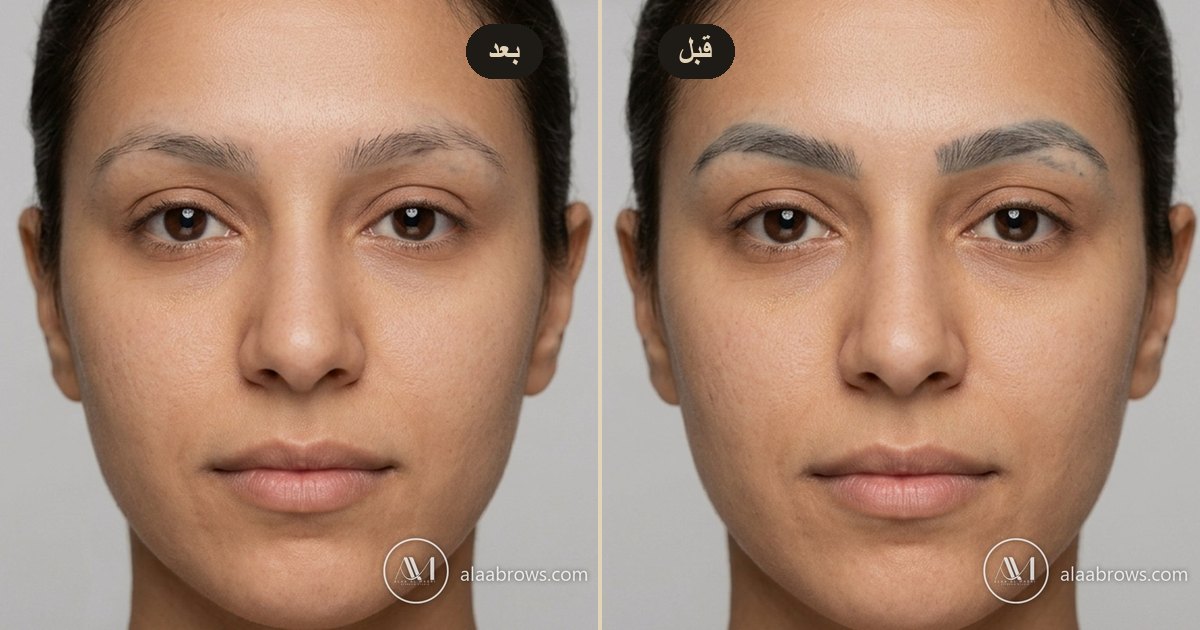
"My brows turned blue" is one of the messages I get most on WhatsApp, often with an apology attached, as if the sender were the one who made the mistake. You didn't. A shifted colour comes from a pigment, a depth, or a technique that didn't suit your skin, and in most cases it can be fixed — as long as it is fixed in the right order, not with a new layer of colour over the old one.
Why do eyebrow tattoos turn blue or red?
Every brow pigment is a blend of shades, and those shades don't fade at the same speed. When the warm components fade first, the cool part remains and the brow looks grey or bluish — especially if the pigment was very dark or placed deeper than it should be, so it shows through the skin. When the opposite happens and the dark part fades, the warm base is left behind and the brow looks red or orange.
Older pigments shifted this way far more than modern ones, which is why most of the cases I see are work that is years old. But recent work can shift too, if it was done on skin it doesn't suit, or if new colour was built over old colour.
The common mistake: covering a blue brow with a darker colour
The first idea many people have is "just draw brown over it and the blue disappears." That doesn't happen. New pigment does not cancel the old one; it mixes with it under the skin, giving a shade nobody can predict — usually a darker, heavier brow than before. That is exactly where most of the grey brows I see come from. Every extra layer makes the later correction longer.
How do I fix blue or red brows? It depends on your case
The fix is decided not by the colour alone but by its strength: is it light and faded, or dark and obvious?
| Brow condition | The fix |
|---|---|
| Light, faded colour with a slight shift | Correction with micropigmentation directly, no removal |
| Dark blue or grey | Removal or lightening first, then rebuild |
| Obvious red or orange | Removal or lightening first, then rebuild |
| Uneven shape, whatever the colour | Removal or lightening, then a shape designed from measurement |
Micropigmentation is the technique that works over old tattoo work when the colour is light, because its density is adjusted to each brow's condition. Microblading and nanoblading, on the other hand, are not an option on any brow with previous work.
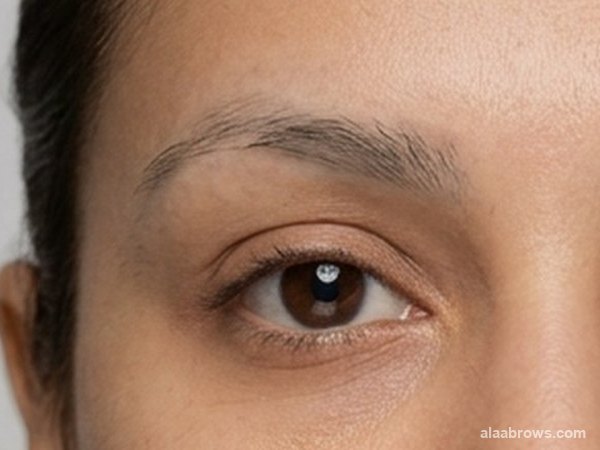
Eyebrow tattoo removal in Amman: what to expect
Brow removal at the studio is JOD 75 per session, and a case may need more than one session depending on how dark and deep the colour is. I won't promise you a number of sessions before I see the brow, because a dark, deep pigment is nothing like a light, shallow one. The goal isn't always complete erasure: sometimes lightening the colour is enough to build a clean new brow over it.
After removal: which technique should I choose?
Once the brow is ready, we choose the technique by your skin, not by what was there before. Micropigmentation (JOD 200, lasts one to two years) suits every skin type, and the fiber technique (JOD 250, lasts one to three years) also suits every skin type and is the closest to natural hair. If your skin is very oily, powder brows (JOD 150) are the first choice. All prices include the touch-up, and you'll find them in full in the eyebrow tattoo price guide.
In short
A blue or red brow can be fixed, but in order: assessment, then removal or lightening if needed, then a rebuild with a technique that suits your skin. Any shortcut — colour over colour — takes you somewhere worse. Send a daylight photo of your brows on WhatsApp at +962797373015, or visit me in Abdoun, Queen Zein Al Sharaf Street (Saturday–Friday 10:00–19:00).
Have a question about your own brows?
A consultation settles which technique suits your skin and your face — no general rule fits everyone.